Echoes of Distortion and Raga
Echoes of Distortion and Raga
Echoes of Distortion and Raga
Feb 3, 2026
Part 1: The Unlikely Convergence of Metal and Carnatic
Conventional wisdom often holds that heavy metal, rock, and Carnatic music occupy disparate realms, seemingly irreconcilable in their aesthetics and cultural origins. However, over the years, my ears seem to have found a secret passageway between the two, one that opens up into fascinating connections and successful blends that prove otherwise. The visceral, raw energy and technicality of metal that is often overlooked by those unfamiliar with the genre, matches the energy of the intricate rhythmic structures and melodic depth of Carnatic music, creating something truly unique and powerful.
It’s always been a natural inclination for me to resist labels and defined categories. My life, in many ways, stands as a testament to this. The idea of neatly fitting into a singular box has never quite resonated, perhaps why the two genres of music always felt strangely harmonious to me. It wasn't until much later that I discovered bands consciously bringing the two together, expertly weaving together the raw intensity of metal with the intricate melodies of traditional music. But in my own world, this blend is simply intuitive, an easy marriage of two musical languages that feels like speaking a native tongue.
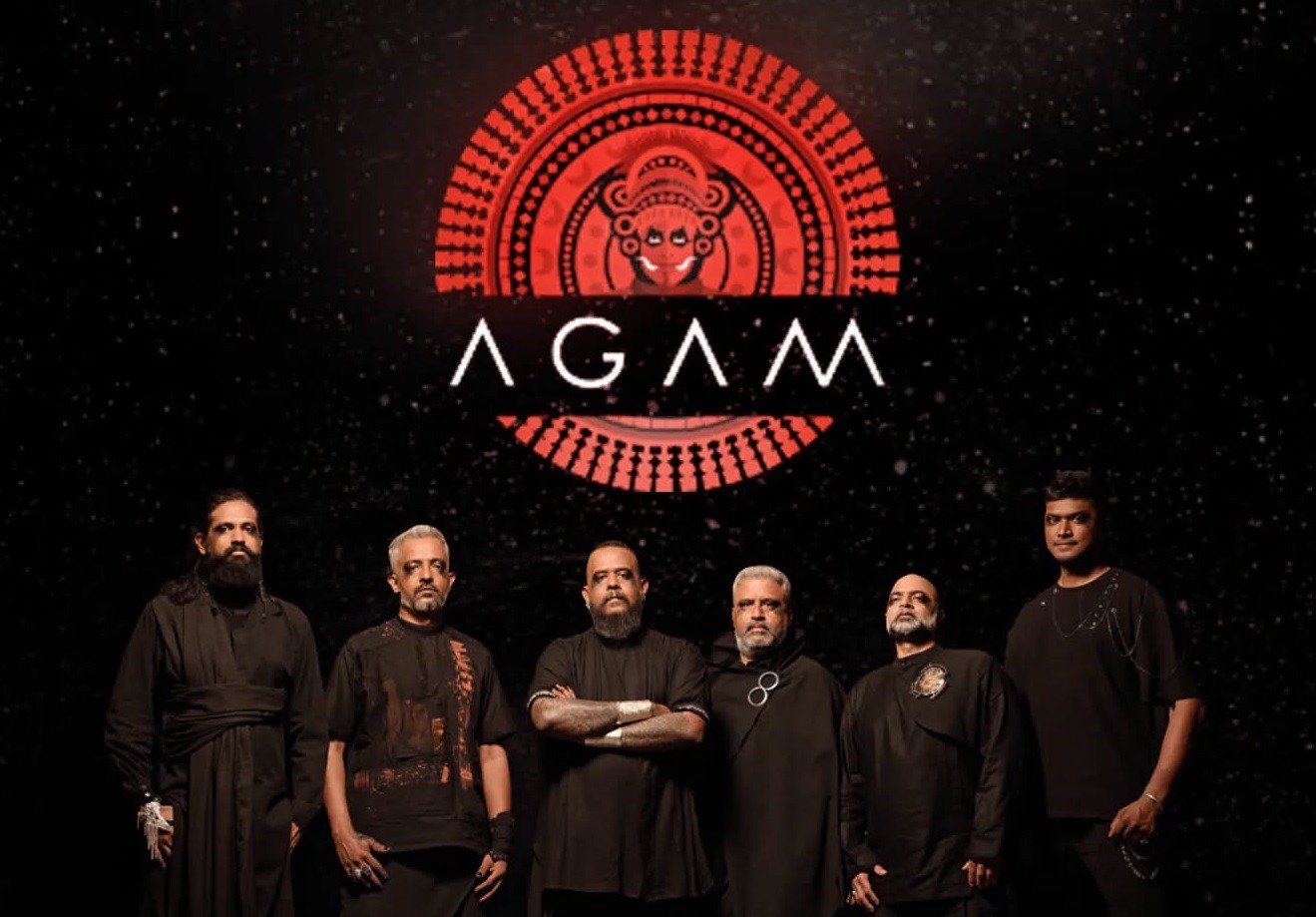
On November 8th, 2015, a band called Agam was to play a concert at the renowned Music Academy in Madras featuring the likes of Sri Aruna Sairam, a collaboration like no other. Playing what is classified as a contemporary Carnatic progressive rock band and known for their innovative fusion of traditional Carnatic music with rock and other genres.
This event represented a significant intersection of classical Carnatic tradition and modern, experimental music. The Music Academy, a hallowed institution for Carnatic music, provided a traditional setting for Agam's contemporary sound, further highlighted by the addition of Sri Aruna Sairam's classical expertise. This collaboration was likely a unique blending of styles, bringing together Agam's complex rhythms, guitar riffs, and progressive arrangements with the purity and depth of Sairam's Carnatic vocals, creating an experience that pushed the boundaries of both genres. Such a collaboration would have drawn diverse audiences, appealing to both traditional Carnatic music lovers and those interested in contemporary fusion music. It likely showcased the adaptability and evolution of Carnatic music in modern times. As far as my memory serves me, up until that point, there were not that many artists and bands who had ventured into the realms of carnatic fusion. There were of course, songs that exhibited the elegance, power and melody of Indian instrumentation but all I knew is that I had to be at that concert.
Both genres feature powerful melodies and intricate melodic phrasing, with heavy metal relying on guitar riffs, blast beats and distortion while Carnatic music utilizes ragas and improvisational passages (Alapana). Rhythmically, both explore complex time signatures and polyrhythms, with metal emphasizing driving beats and Carnatic music employing the tala system with intricate rhythmic cycles. Both genres are also characterized by high-energy performances and passionate delivery, expressing intense emotions and devotion. Improvisation is key in both, with metal having jam sessions and guitar solos and Carnatic music featuring Manodharma Sangeetham within the raga framework. Both are means of profound expression, conveying deep emotions, social commentary, spiritual ideas, and storytelling.
Part 1: The Unlikely Convergence of Metal and Carnatic
Conventional wisdom often holds that heavy metal, rock, and Carnatic music occupy disparate realms, seemingly irreconcilable in their aesthetics and cultural origins. However, over the years, my ears seem to have found a secret passageway between the two, one that opens up into fascinating connections and successful blends that prove otherwise. The visceral, raw energy and technicality of metal that is often overlooked by those unfamiliar with the genre, matches the energy of the intricate rhythmic structures and melodic depth of Carnatic music, creating something truly unique and powerful.
It’s always been a natural inclination for me to resist labels and defined categories. My life, in many ways, stands as a testament to this. The idea of neatly fitting into a singular box has never quite resonated, perhaps why the two genres of music always felt strangely harmonious to me. It wasn't until much later that I discovered bands consciously bringing the two together, expertly weaving together the raw intensity of metal with the intricate melodies of traditional music. But in my own world, this blend is simply intuitive, an easy marriage of two musical languages that feels like speaking a native tongue.
On November 8th, 2015, a band called Agam was to play a concert at the renowned Music Academy in Madras featuring the likes of Sri Aruna Sairam, a collaboration like no other. Playing what is classified as a contemporary Carnatic progressive rock band and known for their innovative fusion of traditional Carnatic music with rock and other genres.
This event represented a significant intersection of classical Carnatic tradition and modern, experimental music. The Music Academy, a hallowed institution for Carnatic music, provided a traditional setting for Agam's contemporary sound, further highlighted by the addition of Sri Aruna Sairam's classical expertise. This collaboration was likely a unique blending of styles, bringing together Agam's complex rhythms, guitar riffs, and progressive arrangements with the purity and depth of Sairam's Carnatic vocals, creating an experience that pushed the boundaries of both genres. Such a collaboration would have drawn diverse audiences, appealing to both traditional Carnatic music lovers and those interested in contemporary fusion music. It likely showcased the adaptability and evolution of Carnatic music in modern times. As far as my memory serves me, up until that point, there were not that many artists and bands who had ventured into the realms of carnatic fusion. There were of course, songs that exhibited the elegance, power and melody of Indian instrumentation but all I knew is that I had to be at that concert.
Both genres feature powerful melodies and intricate melodic phrasing, with heavy metal relying on guitar riffs, blast beats and distortion while Carnatic music utilizes ragas and improvisational passages (Alapana). Rhythmically, both explore complex time signatures and polyrhythms, with metal emphasizing driving beats and Carnatic music employing the tala system with intricate rhythmic cycles. Both genres are also characterized by high-energy performances and passionate delivery, expressing intense emotions and devotion. Improvisation is key in both, with metal having jam sessions and guitar solos and Carnatic music featuring Manodharma Sangeetham within the raga framework. Both are means of profound expression, conveying deep emotions, social commentary, spiritual ideas, and storytelling.
Back to blogs
Thank you readers, for your time and love.
Hail mantras and heavy metal; as below, so above
Thank you readers, for your time and love.
Hail mantras and heavy metal; as below, so above
Thank you readers, for your time and love.
Hail mantras and heavy metal; as below, so above


Copyrighted © 2024 by Metal Maami
Copyrighted © 2024 by Metal Maami